Loft Insulation Bristol - Everything Bristol Homeowners Need to Know
Why Loft Insulation Matters for Bristol Homes
An uninsulated loft loses up to 25% of a home's heat straight through the roof. For Bristol homeowners paying rising energy bills, that figure translates directly into wasted money every single month. Properly installed loft insulation keeps warmth where it belongs and can save a typical Bristol household £150–£300 per year on energy costs.
Bristol's housing stock is dominated by Victorian and Edwardian terraces, inter-war semis, and post-war builds. Many of these properties either have no insulation at all or carry an outdated, thin layer that falls well short of current recommended depths. Upgrading is one of the most cost-effective home improvements available, with a payback period measurable in years rather than decades.
How Loft Insulation Works - Cold Roof vs Warm Roof
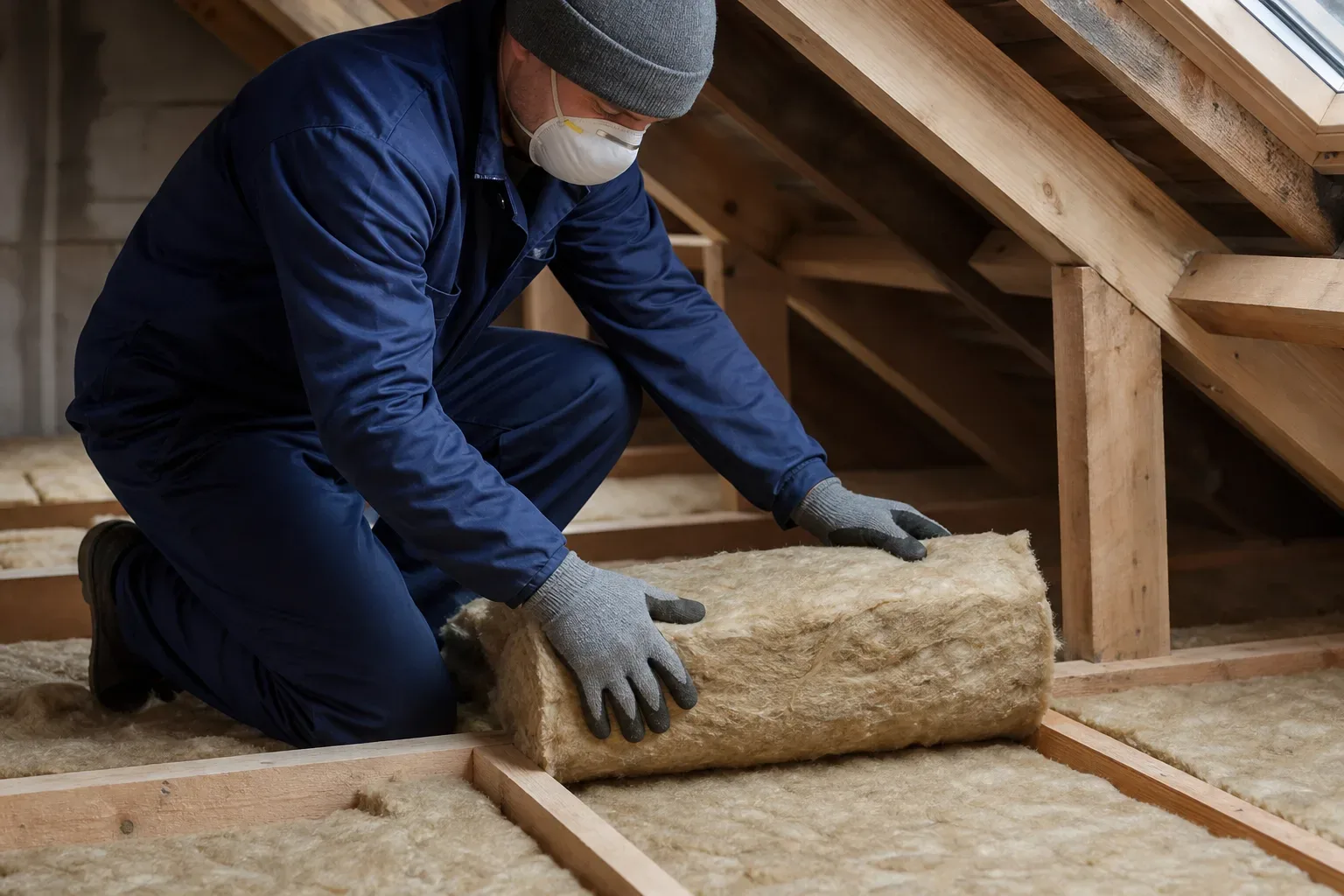
The method used depends on how the loft space is used. Most Bristol homes have an unheated loft, and insulation is laid at joist level across the ceiling of the floor below. This is called a cold roof configuration because the roof space itself remains unheated.
If the loft is converted or used as a habitable room, insulation is fitted at rafter level instead, bringing the loft into the home's thermal envelope. This is a warm roof approach. The choice between the two determines the materials, depth, and cost of the job, so it is worth deciding how you use the space before inviting quotes.
The Recommended Depth for Cold Roof Insulation
For a cold roof, mineral wool is the standard material and the recommended installation depth is 270 mm. Achieving that depth delivers a U-value of around 0.16 W/m²K, which is the target set by England's Approved Document L for existing dwellings. Any existing insulation that is thinner than this is worth topping up, even if the original work was done correctly at the time.
Types of Loft Insulation Available in Bristol
Mineral wool is the most widely installed product across Bristol. It comes in rolls or batts, is straightforward to fit between joists, and is cost-effective at scale. Most standard loft insulation quotes are based on mineral wool.
Spray foam is an alternative that fills awkward roof spaces and bonds to rafters and felt. It costs £20–£50 per m² and can be useful in hard-to-reach areas. The significant caveat is that spray foam insulation can affect mortgage and remortgage applications and may deter buyers, so it warrants careful consideration before installation.
Sheep wool is a natural, breathable option suited to older Bristol properties where moisture management is a priority. It costs £15–£35 per m² and performs well in buildings that rely on vapour permeability. Full detail on all material types is covered on the dedicated types of loft insulation page.
Loft Insulation Costs in Bristol
Pricing depends primarily on loft floor area and access difficulty. The figures below reflect a typical Bristol installation using mineral wool on a straightforward cold roof.
Cost by Property Type
- Small terraced house (around 40–50 m² loft floor area): £300–£500
- Semi-detached house (around 50–70 m² loft area): £400–£600
- Detached house (around 70–100 m² loft area): £600–£900
These are installed costs including labour and materials. A standard job takes half a day to one full day, with larger or more complex lofts occasionally running longer. Most Bristol installers will provide a written quote within 2–5 working days of an initial enquiry.
Spray foam and sheep wool projects sit at the higher end of the cost spectrum due to material prices and installation complexity. The detailed cost breakdown, including top-up insulation pricing, is on the loft insulation costs page.
Grants and Funding Available to Bristol Homeowners
Several funding routes can reduce or eliminate the upfront cost of loft insulation.
ECO4
The Energy Company Obligation 4 scheme is the primary grant route for Bristol households. Eligible households may receive fully funded loft insulation at no upfront cost, subject to qualifying on benefits or income criteria. The approximate gross household income threshold is £31,000 per year, though the scheme also has a benefits-based route that bypasses the income test.
ECO4 runs until 31 December 2026. There is no confirmed successor scheme, so households that may qualify are better served applying sooner rather than waiting.
Warm Homes - Local Grant
Bristol City Council delivers the Warm Homes: Local Grant on behalf of the government, and the scheme is open until 31 March 2028. This council-administered route can fund insulation for lower-income owner-occupiers and private renters in eligible properties. It sits alongside ECO4 rather than replacing it.
Great British Insulation Scheme
The Great British Insulation Scheme closed to new applicants in October 2025 and all installations ended on 31 March 2026. It is no longer available. If you were waiting on this route, ECO4 and the Warm Homes: Local Grant are the active alternatives.
Choosing a Loft Insulation Installer in Bristol
Accreditation is the clearest indicator of a reliable installer. The two primary schemes to look for are TrustMark and membership of the National Insulation Association. Installers carrying these accreditations work to recognised quality standards and offer routes to redress if something goes wrong.
Before accepting a quote, confirm the installer will assess your current insulation depth, check loft hatch and tank insulation, and confirm whether your property meets building regulations after the work. A reputable Bristol installer will do this as standard rather than charging extra for it.
What to Expect on the Day
Most jobs start with a loft inspection to check joists, pipework, and any existing insulation. Mineral wool is rolled out between and over the joists in two layers to achieve the full 270 mm depth. Water tanks and pipes in the loft space need to be insulated separately, since the cold roof configuration leaves them exposed to lower temperatures. The installation team should address this as part of the job.
Loft Insulation Lifespan and Maintenance
Quality mineral wool or sheep wool insulation, correctly installed, has an expected effective lifespan of 40+ years. It does not need routine maintenance, but it is worth inspecting every five to ten years to check that it has not been disturbed by roof repairs, pest activity, or storage shifting the rolls out of position.
If you are buying or selling a Bristol property, loft insulation is likely to be flagged on the Energy Performance Certificate. A well-insulated loft improves the EPC rating directly and is a concrete selling point in Bristol's competitive housing market.
Getting Started
The logical first step is to check your current loft insulation depth and condition. If you are not sure what is there, a reputable Bristol installer will assess this during a free survey. From there, you can decide whether a top-up, a full installation, or a grant application is the right route.
For most Bristol homeowners, loft insulation is one of the quickest-return investments available. The combination of reduced heat loss, lower energy bills, and available funding makes it worth acting on rather than deferring.
Frequently Asked Questions
How Much Does Loft Insulation Cost in Bristol?
Costs depend on property size. A small terraced house typically costs £300–£500, a semi-detached property £400–£600, and a detached house £600–£900. These figures cover mineral wool installed in a standard cold roof configuration.
Can I Get Free Loft Insulation in Bristol?
Yes, if you qualify under ECO4. Eligible households may receive fully funded loft insulation at no upfront cost based on income below roughly £31,000 per year or receipt of qualifying benefits. The Warm Homes: Local Grant, delivered by Bristol City Council, is a second active funding route.
How Long Does Loft Insulation Last?
Quality mineral wool or sheep wool insulation correctly installed has an expected effective lifespan of 40 or more years. It does not need routine servicing, though it is worth checking periodically that it has not been disturbed.
Is Spray Foam Loft Insulation a Good Idea for Bristol Homes?
Spray foam fills awkward spaces effectively but carries a significant risk: it can affect mortgage and remortgage applications and may deter buyers. Most Bristol homeowners are better served by mineral wool unless there is a specific reason spray foam is required.
Do I Need Planning Permission for Loft Insulation in Bristol?
Most standard loft insulation work in Bristol does not require planning permission. Insulating between joists or rafters in an existing home is treated as permitted development. Converting a loft into habitable space is a separate matter and does involve building regulations approval.
- Loft Insulation Installation in Bristol - Costs, Grants and Installers - Homeowners in Bristol researching loft insulation want a comprehensive overview of options, costs, and benefits
- Types of Loft Insulation Available to Bristol Homeowners - Bristol homeowners want to compare different insulation materials and methods to choose the right one for their property