Loft Insulation Building Regulations in Bristol - What You Need to Know
Loft insulation in Bristol is one of the most cost-effective home improvements you can make, but compliance questions stop many homeowners before they start. Understanding what building regulations actually require, and when they apply, makes the whole process far less daunting.
Does Loft Insulation Require Planning Permission in Bristol?
Most standard loft insulation in Bristol does not require planning permission. Installing mineral wool between ceiling joists or between rafters in an existing home is treated as routine maintenance rather than a structural alteration. Bristol City Council follows national permitted development rules, so you are not likely to face any application process for straightforward insulation work.
The distinction changes if you are converting the loft into a habitable room. That triggers both planning permission and a full building regulations application. Insulating an existing cold storage loft is an entirely separate matter from creating a bedroom or office up there.
When Do Building Regulations Apply?
Building regulations do apply to loft insulation work in certain circumstances. The key trigger is whether the work materially affects the thermal performance of the building envelope. Adding insulation to a previously uninsulated loft in a Bristol home is formally notifiable if it forms part of a larger project, such as a roof replacement or an extension.
For straightforward top-up or new cold roof insulation in an otherwise unchanged property, most householders proceed under the general principle that the work is exempt from a formal application. If you are in any doubt, contacting Bristol City Council's building control team directly takes only a few minutes and gives you a clear written steer.
Cold Roof vs Warm Roof - Understanding the Terms
A cold roof has insulation laid at ceiling joist level, leaving the roof space itself unheated. A warm roof places insulation at rafter level, bringing the loft into the thermal envelope of the home. The two configurations carry different compliance implications.
Cold roof installations are the more common choice in Bristol's traditional terraced and semi-detached stock. Warm roof configurations are more typical in loft conversions and are more likely to require a building regulations application because they change how the whole roof structure performs.
The U-Value Target You Need to Meet
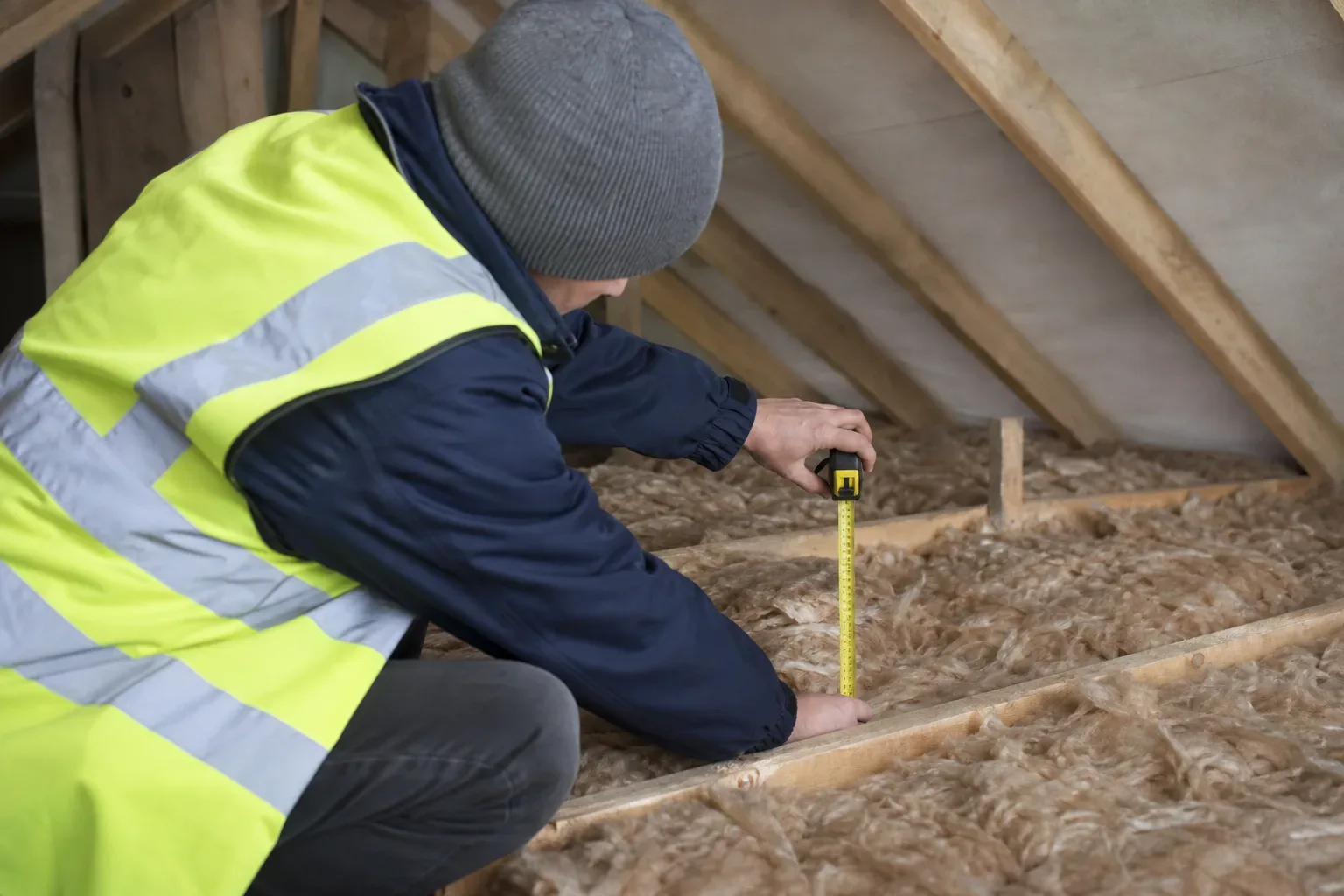
Approved Document L for existing dwellings in England sets a target U-value of 0.16 W/m²K for pitched roofs with insulation at ceiling level. Hitting that target in practice means installing mineral wool to a depth of 270 mm, which is the current UK figure recommended by the Energy Saving Trust.
The standard installation approach lays around 100 mm between the joists, then a further 170 mm of mineral wool rolls at right angles on top. This cross-layering minimises thermal bridging through the joists themselves and is the method Bristol installers typically use to satisfy building control inspectors.
What Happens If You Fall Short?
If an inspection finds that insulation depth or continuity is inadequate, a remediation notice can require you to bring the work up to standard. This is uncommon with experienced installers, but it is a real risk with very cheap or informal work. Keeping your installer's specification sheet and any building control sign-off documentation protects you at resale.
Mortgage lenders and surveyors increasingly ask for evidence of compliant insulation. A property with adequate documentation sells more smoothly than one where the buyer's solicitor has to raise requisitions.
Costs for Bristol Homeowners
Compliant professional installation does not have to be expensive. For a small terraced home with roughly 40–50 m² of loft floor area, mineral wool installation typically costs £300–£500. A semi-detached Bristol property usually falls in the £400–£600 range, while a detached home tends to sit between £600–£900.
Spray foam insulation is available at £20–£50 per m² and can be appealing for awkward roof spaces. However, spray foam can affect mortgage and remortgage applications and may deter buyers, so weigh that risk carefully before committing. Sheep wool insulation runs £15–£35 per m² and is a breathable, eco-friendly alternative favoured by some Bristol homeowners in period properties.
Quality insulation properly installed lasts 40 or more years and can cut heat loss through the roof by up to 25%. Annual energy bill savings typically run to £150–£300 for a Bristol home, depending on property size and heating system.
Grants and Funding in Bristol
The Energy Company Obligation 4 scheme, known as ECO4, is the primary national funding route for eligible households. Households earning up to roughly £31,000 per year, or receiving qualifying benefits, may receive fully funded loft insulation at no upfront cost. ECO4 runs to 31 December 2026, so time remains to apply but it is not open-ended.
The Warm Homes: Local Grant is a separate council-delivered route under the Warm Homes Plan. In Bristol it is delivered via Bristol City Council and runs to 31 March 2028. It targets lower-income households in less energy-efficient properties and can cover insulation costs alongside other measures.
The Great British Insulation Scheme closed to new applicants in October 2025 and installations ended on 31 March 2026. It is no longer available, so any installer still promoting it is working from outdated information.
Choosing a Compliant Installer in Bristol
Installer accreditation matters both for the quality of the work and for funding eligibility. The two main schemes to look for in Bristol are TrustMark and the National Insulation Association. Installers holding these accreditations work to defined standards and carry the documentation that building control and mortgage lenders expect.
Most Bristol installers turn around a written quote within 2–5 working days of an initial enquiry. A typical loft insulation job, cold roof mineral wool in a standard house, takes between half a day and a full day on site. Larger or more complex lofts take longer, but the disruption to your household is generally minimal.
What to Ask Your Installer Before Work Starts
Before any work begins, confirm that the installer will specify the insulation depth and U-value being targeted, provide a written quote referencing compliance with Approved Document L, and indicate whether a building regulations notification is needed for your specific project. Also ask what happens if access issues or existing defects are discovered during installation.
Getting at least two quotes from accredited installers gives you a useful benchmark on both price and the scope of work proposed. Where quotes vary significantly, the difference usually relates to preparation work, such as clearing stored items or treating existing ventilation gaps, rather than the insulation material itself.
Ventilation Requirements Alongside Insulation
Building regulations require that adequate roof space ventilation is maintained even after insulation is installed. For a cold roof, a clear ventilation path at eaves level must be preserved across the full perimeter. Blocking that path traps moisture and risks interstitial condensation, which damages both the insulation and the roof structure over time.
Bristol's older housing stock, particularly Victorian terraced rows in Bedminster or Clifton, often has shallow eaves details that need careful attention. A competent installer surveys ventilation as part of the job specification rather than leaving it as an afterthought. If your current insulation was installed without attention to this, a professional survey is worth arranging before adding further depth.
Frequently Asked Questions
Do I Need Planning Permission for Loft Insulation in Bristol?
Most standard loft insulation in Bristol does not require planning permission. Insulating between joists or rafters in an existing home falls under permitted development. Planning permission only becomes relevant if you are converting the loft into a habitable space.
What U-value Do I Need to Achieve for Loft Insulation in Bristol?
Approved Document L for existing dwellings in England sets a target U-value of 0.16 W/m²K for pitched roofs insulated at ceiling level. In practice this means installing mineral wool to a depth of 270 mm, typically laid in two cross-layered stages.
How Much Does Compliant Loft Insulation Cost in Bristol?
For a small terraced home the cost typically runs £300–£500. A semi-detached property usually falls in the £400–£600 range, and a detached home tends to sit between £600–£900. Prices vary based on loft area, access, and the insulation material chosen.
Can I Get a Grant for Loft Insulation in Bristol?
ECO4 may fund fully funded loft insulation at no upfront cost for households earning up to around £31,000 per year or receiving qualifying benefits. The scheme runs to 31 December 2026. The Warm Homes: Local Grant, delivered via Bristol City Council, is also open and runs to 31 March 2028.
Does Spray Foam Insulation Meet Building Regulations in Bristol?
Spray foam can technically achieve the required thermal performance, costing £20–£50 per m². However, it can affect mortgage and remortgage applications and may deter buyers. Always discuss the implications with your installer and mortgage provider before choosing spray foam over mineral wool.