Warm Roof vs Cold Roof Loft Insulation in Bristol - Which Is Better?
Bristol homeowners choosing loft insulation face a fundamental decision before a single roll of mineral wool is ordered: insulate at joist level or at rafter level. That choice determines how your home loses heat, how your loft space can be used, and how much the job will cost. Understanding the difference between a warm roof and a cold roof puts you in control of that decision.
What a Cold Roof Actually Means
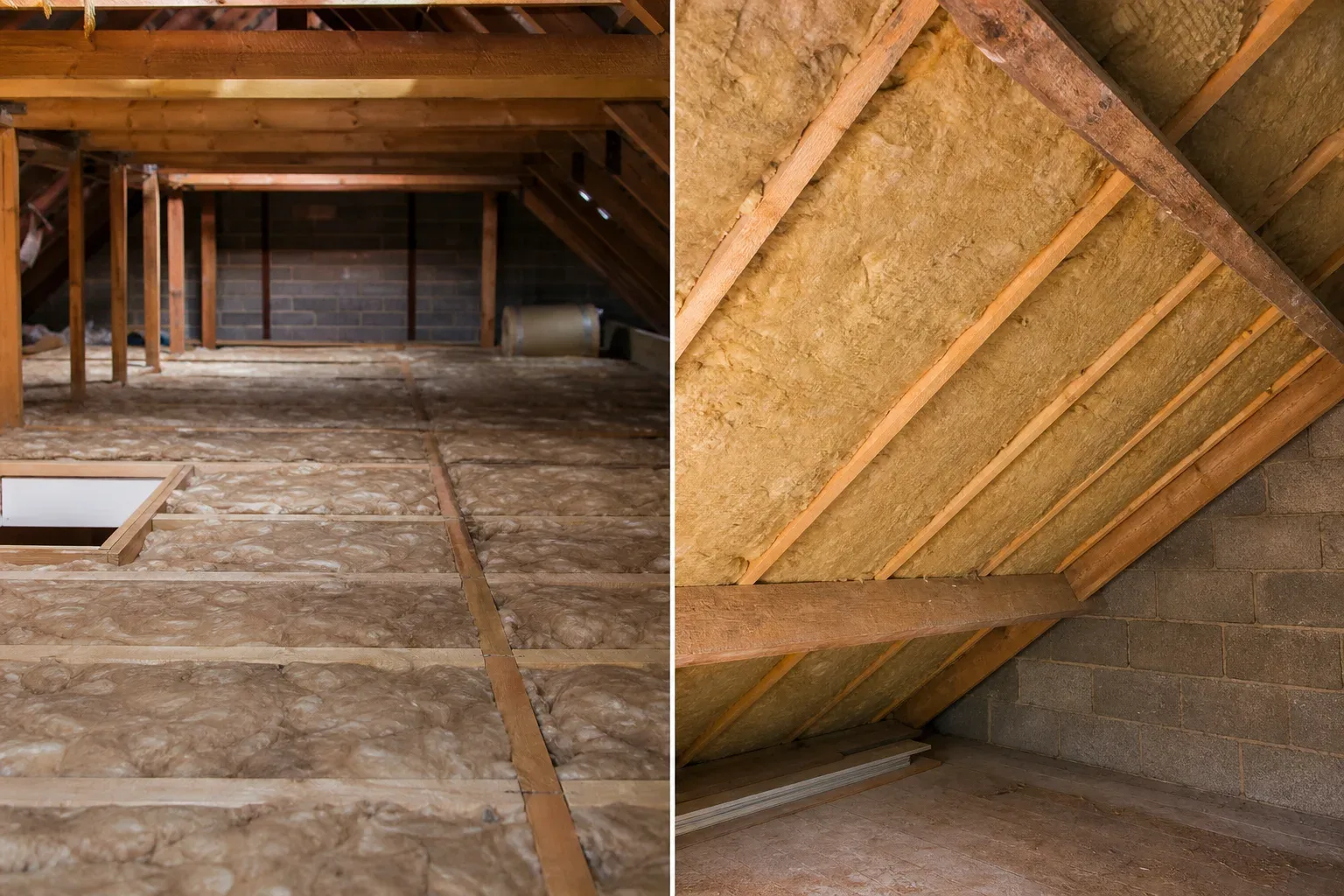
A cold roof places insulation across the loft floor, between and over the ceiling joists, leaving the roof space itself unheated. The loft sits outside the thermal envelope of the home. Heat is kept in the living floors below, and the roof void is ventilated to prevent condensation.
Mineral wool is the standard material for cold roof installations in Bristol. The current UK recommended depth is 270 mm, which achieves the Building Regulations target U-value of 0.16 W/m²K for a pitched roof at ceiling level. Most installers lay a first layer between the joists and a second layer across them at right angles to eliminate thermal bridging.
Because the loft stays cold, it remains a storage space rather than a living area. Access hatches and water tanks in the void will need lagging separately, since pipes above the insulation layer are exposed to unheated air.
What a Warm Roof Actually Means
A warm roof fixes insulation between and beneath the rafters, bringing the loft space inside the thermal envelope. The roof void is heated along with the rest of the house. This approach is standard when a loft is being converted into a bedroom, home office, or habitable room.
Warm roof insulation is more complex to install correctly. Achieving the target U-value at rafter level often requires a combination of rigid insulation boards between rafters and a continuous layer fixed below them, which adds both material and labour cost. Ventilation requirements differ too: some warm roof configurations are unventilated, which demands careful specification to avoid interstitial condensation.
Spray foam is occasionally used in warm roof applications, applied directly to the underside of the roof deck. Costs run at £20–£50 per m² depending on foam type and access. Bristol homeowners should be aware that spray foam can affect mortgage and remortgage applications and may deter buyers, so the financial implications deserve careful consideration before committing.
Comparing the Two Approaches for Bristol Homes
Cost Differences
Cold roof insulation is consistently the cheaper option for a standard Bristol property. A small terraced house with a loft floor area of roughly 40–50 m² typically costs £300–£500 using mineral wool. A semi-detached property in the 50–70 m² range sits in the £400–£600 bracket. A detached home with a larger loft area, say 70–100 m², will generally fall in the £600–£900 range.
Warm roof insulation costs more because it uses denser, higher-performance boards and requires greater installation time. If a full loft conversion is the goal, the insulation cost sits inside a much larger project budget and is harder to isolate as a standalone figure.
Heat Loss and Energy Savings
An uninsulated loft can account for up to 25% of a home's heat loss. Both warm roof and cold roof approaches address that problem, but the cold roof does so by stopping heat before it enters the loft void, while the warm roof wraps the entire roof space. For a home that uses the loft only for storage, the cold roof delivers the same thermal benefit at lower cost.
Typical annual energy bill savings after professional loft insulation run at £150–£300 for a Bristol home, depending on property size and heating system. The cold roof route reaches that saving faster because the upfront investment is lower.
Lifespan and Maintenance
Quality mineral wool or sheep wool insulation correctly installed carries an expected lifespan of 40 years or more. Cold roof installations involve fewer penetrations into the roof structure, which keeps long-term maintenance straightforward. Warm roof rigid board systems can also last decades, but any remedial work requires access to the rafter zone.
Sheep wool is a viable alternative to mineral wool for either configuration, at £15–£35 per m². It is breathable and naturally manages moisture, which appeals to Bristol homeowners in older Victorian or Edwardian properties where vapour movement through the structure is important.
Which Roof Type Suits Bristol Properties
Bristol's housing stock is heavily weighted toward Victorian and Edwardian terraces and semi-detached homes, particularly across Southville, Bedminster, Redland, and Bishopston. These properties typically have accessible loft voids with standard pitched roofs, making cold roof insulation the default practical choice. The loft floor approach is quick, the materials are widely available, and most Bristol installers can complete a standard job in half a day to a full day.
Warm roof installations are more common in: properties undergoing a full loft conversion, homes with flat or low-pitch roofs where joist-level insulation is impractical, and listed or conservation-area properties in Bristol where the interior appearance of roof timbers needs to be maintained.
If your loft is purely a storage or utility space and you are not planning a conversion, the cold roof route is almost always the right answer on both cost and simplicity grounds.
Grants and Funding Available in Bristol
Several funding routes remain open for Bristol homeowners in 2026. The Energy Company Obligation 4 scheme, commonly called ECO4, is open until 31 December 2026. Eligible households with an income up to approximately £31,000 per year, or receiving qualifying benefits, may receive fully funded loft insulation at no upfront cost. Always verify current eligibility criteria with a registered installer before assuming you qualify.
The Warm Homes Local Grant runs to 31 March 2028 and is delivered in Bristol via Bristol City Council. It targets lower-income owner-occupiers and private renters in less energy-efficient homes, and can fund insulation measures including cold roof mineral wool installation.
The Great British Insulation Scheme closed to new applicants in late 2025 and installations finished on 31 March 2026. It is no longer available.
Choosing a Qualified Installer in Bristol
Whichever configuration you choose, the installer's accreditation matters. The two main schemes to look for are TrustMark and the National Insulation Association. Both provide a layer of accountability for workmanship and materials. Most Bristol installers will provide a written quote within 2–5 working days of an initial enquiry.
For cold roof mineral wool jobs, confirm the installer specifies 270 mm total depth and cross-laps the second layer. For warm roof work, ask to see a full specification including how the target U-value is achieved and how condensation risk is managed. A clear written spec protects you if any dispute arises after installation.
Frequently Asked Questions
What Is the Main Difference Between a Warm Roof and a Cold Roof?
A cold roof places insulation at joist level across the loft floor, leaving the roof void unheated and ventilated. A warm roof fixes insulation at rafter level, bringing the loft space inside the thermal envelope of the home. The cold roof is standard for storage lofts; the warm roof is used when the loft is being converted into a habitable room.
How Deep Should Cold Roof Mineral Wool Insulation Be in Bristol?
The current UK recommended depth for mineral wool cold roof insulation is 270 mm. This is typically achieved by laying one layer between the joists and a second layer across them at right angles, which also reduces thermal bridging through the joists themselves.
Can I Get a Grant for Loft Insulation in Bristol in 2026?
Yes. ECO4 remains open until 31 December 2026 and can fund fully installed loft insulation for eligible households with incomes up to roughly £31,000 per year or those receiving qualifying benefits. The Warm Homes Local Grant, delivered via Bristol City Council, runs to 31 March 2028 and targets lower-income owner-occupiers and private renters.
Is Spray Foam Insulation a Good Choice for a Bristol Loft?
Spray foam costs £20–£50 per m² and can be effective in certain warm roof applications, but it carries a significant financial risk: it can affect mortgage and remortgage applications and may put off potential buyers. Most Bristol homeowners are better served by mineral wool for a cold roof or rigid board insulation for a warm roof conversion.
How Long Does Loft Insulation Last and Is It Worth the Investment?
Quality mineral wool or sheep wool loft insulation correctly installed lasts 40 years or more. With typical annual energy bill savings of £150–£300 for a Bristol home, most cold roof installations pay back their cost within a few years, making them one of the most straightforward energy efficiency investments available.