Best Loft Insulation Installers in Bristol - How to Choose
Why the Right Installer Matters
Up to 25% of a home's heat escapes through an uninsulated roof, so a poorly fitted job wastes money from day one. The material choice matters, but the installation quality matters just as much. Choosing a vetted Bristol installer protects your investment and ensures the work meets current building standards.
What Accreditation to Look For
Two accreditation schemes consistently signal a trustworthy installer: TrustMark and the National Insulation Association (NIA). TrustMark is a government-endorsed quality scheme; NIA membership requires installers to meet technical standards and carry appropriate insurance. Always ask to see current membership credentials before signing anything.
Accredited installers are also the only route to accessing ECO4 grant funding, which can cover the full cost of loft insulation for eligible households. If a company cannot demonstrate accreditation, it cannot legally install under government-backed schemes.
Questions to Ask Every Installer
Do They Survey Before Quoting?
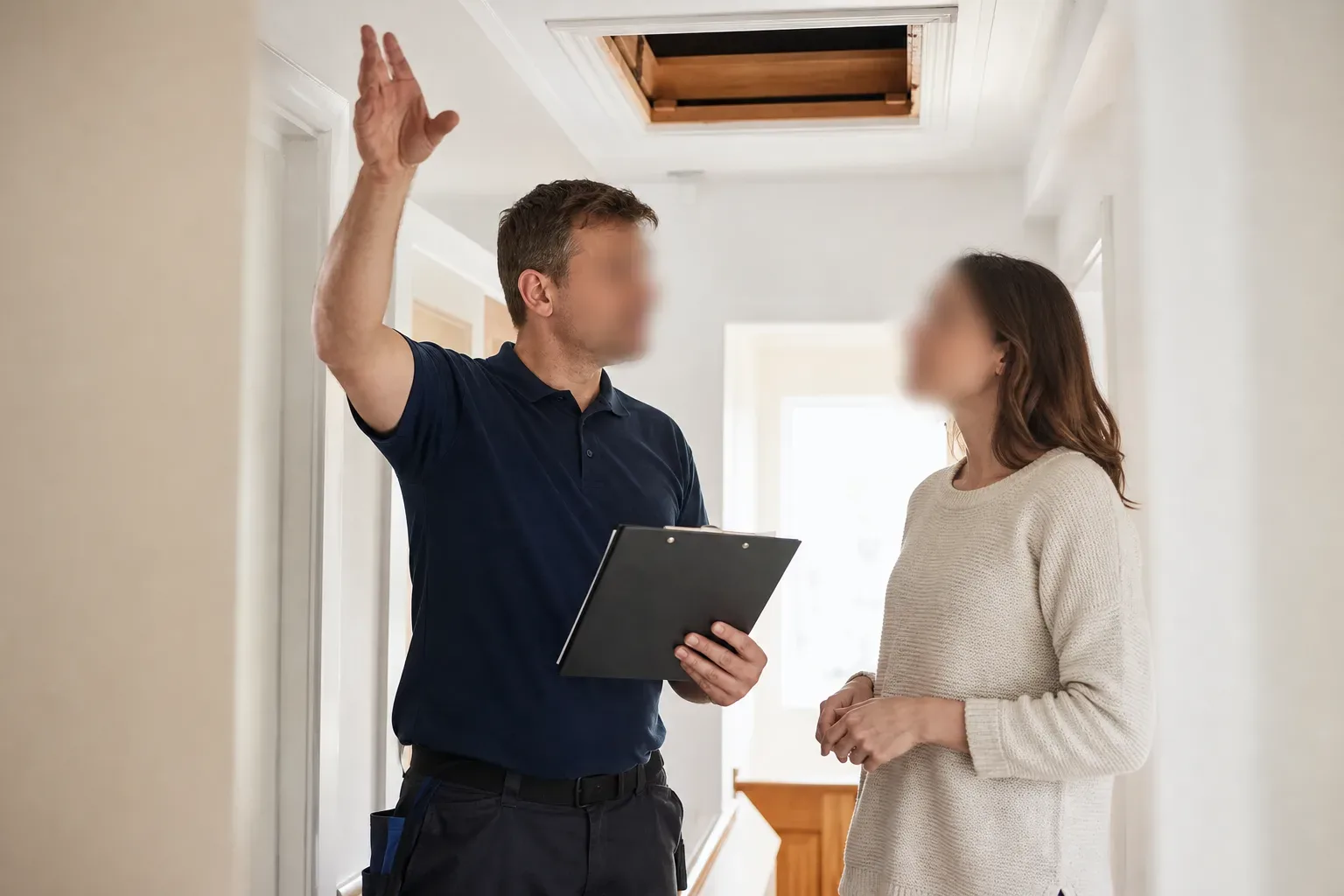
A reputable loft insulation installer in Bristol will always carry out a physical survey before providing a written quote. Loft spaces vary enormously: some have hatches too small for standard equipment, others have existing insulation that needs clearing, and some contain asbestos in older properties. A quote issued without a survey is a guess, not a price.
What Is Their Quote Turnaround?
Most established Bristol installers return a written quote within 2–5 working days of the survey. Anything significantly faster with no site visit, or slower with no explanation, is worth querying.
How Long Will the Job Take?
For a standard Bristol home, most loft insulation jobs complete within half a day to one full day. Larger or more complex lofts may run longer, but an installer should give you a clear time estimate upfront.
Which Insulation Type Are They Recommending and Why?
The most common material is mineral wool, installed to a depth of 270 mm at joist level. That depth meets the current UK recommended standard and achieves the Building Regulations target U-value of 0.16 W/m²K for a pitched roof insulated at ceiling level. If an installer recommends a shallower depth, ask for the technical justification.
Some Bristol properties suit alternative materials. Sheep wool insulation costs £15–£35 per m² and suits homeowners who prefer a natural, breathable product. Spray foam costs £20–£50 per m² and is sometimes proposed for awkward or difficult-to-access spaces, but it carries a significant caveat: spray foam can affect mortgage and remortgage applications and may deter future buyers. Always seek independent advice before agreeing to spray foam.
Understanding Bristol Loft Insulation Costs
Prices vary by property size and material, but the ranges below reflect typical Bristol installations using mineral wool.
- Small terraced house (roughly 40–50 m² loft floor): £300–£500
- Semi-detached house (roughly 50–70 m² loft floor): £400–£600
- Detached house (roughly 70–100 m² loft floor): £600–£900
These are cold roof configurations, meaning insulation sits at joist level and the roof space above remains unheated. A warm roof installation, where insulation runs at rafter level to bring the loft into the thermal envelope, costs more and is typically associated with loft conversions rather than standard insulation upgrades.
Quality mineral wool or sheep wool insulation, correctly installed, carries an expected lifespan of 40 or more years. Viewed over that period, even the higher end of the cost range represents a modest outlay, particularly given annual energy bill savings of around £150–£300 for a typical Bristol home.
Grant Funding Available in Bristol Right Now
ECO4
ECO4 (Energy Company Obligation 4) is the primary national grant scheme for loft insulation. Eligible households, broadly those receiving qualifying benefits or with a gross household income up to around £31,000 per year, may receive fully funded loft insulation at no upfront cost. ECO4 runs until 31 December 2026, with no confirmed successor scheme. Confirming eligibility through an accredited installer or an independent energy advice service is the most reliable first step.
Note that the Great British Insulation Scheme closed to new applicants in October 2025 and installations ended on 31 March 2026. It is no longer available.
Warm Homes - Local Grant
Bristol City Council delivers the Warm Homes: Local Grant on behalf of the government. This scheme runs until 31 March 2028 and targets lower-income households in less energy-efficient properties. It is a practical alternative or complement to ECO4 for Bristol residents who do not qualify under the national scheme's criteria.
Red Flags to Avoid
Cold-call approaches, whether by phone, door-knock, or online ad promising free insulation with no eligibility check, are a reliable warning sign. Legitimate installers do not pressure households into same-day decisions. Any company unwilling to provide a written, itemised quote or to share their TrustMark or NIA registration number warrants scrutiny.
Also watch for vague depth specifications. An installer quoting a figure without specifying the insulation depth, material, and whether it covers both the between-joist and cross-joist layers is not giving you a comparable quote.
How to Compare Multiple Quotes Effectively
Collect at least three written quotes and ensure they specify the same scope: material type, depth, total area covered, and any preparatory work such as clearing old insulation or boarding around the hatch. Price alone is a poor comparator if the specifications differ.
Check online reviews on Google and Trustpilot, but weight recent reviews more heavily than older ones. A company that performed well three years ago and has accumulated complaints in the past twelve months is not the same business you are reading about in the older reviews.
Finally, confirm the installer carries public liability insurance and offers a workmanship guarantee. Most NIA members provide a guarantee backed by the scheme, giving you a route to redress if problems emerge after the job is complete.
Frequently Asked Questions
How Do I Check If a Loft Insulation Installer in Bristol Is Accredited?
Ask the installer for their TrustMark registration number and NIA membership details, then verify both directly on the TrustMark and NIA websites. Accredited installers will share these credentials without hesitation.
How Much Does Loft Insulation Cost for a Typical Bristol Home?
For mineral wool installed at 270 mm depth, expect £300–£500 for a small terraced house, £400–£600 for a semi-detached, and £600–£900 for a detached property. These figures cover standard cold roof installations.
Can I Get Free Loft Insulation in Bristol Through a Government Grant?
Eligible households may receive fully funded loft insulation through ECO4 at no upfront cost. Bristol City Council also delivers the Warm Homes: Local Grant for lower-income households in less efficient properties. Both schemes require an eligibility check with an accredited installer.
Is Spray Foam Loft Insulation a Good Choice for Bristol Homes?
Spray foam can work in difficult-to-access spaces, but it carries a serious financial risk: it can affect mortgage and remortgage applications and may put off future buyers. Independent advice is strongly recommended before agreeing to spray foam installation.
Does Loft Insulation in Bristol Require Planning Permission?
Most standard loft insulation in Bristol does not require planning permission. Insulating between joists or rafters in an existing home is generally permitted development. Converting a loft to habitable space is a separate matter and involves different regulations.