Spray Foam Loft Insulation in Bristol - Is It Right for Your Home?
Spray foam loft insulation divides opinion more than almost any other home improvement product. It can deliver excellent thermal performance, but it carries a well-documented risk that catches many Bristol homeowners off guard: mortgage lenders may refuse to lend on properties where spray foam has been installed in the roof space. Understanding exactly what you are buying before committing is essential.
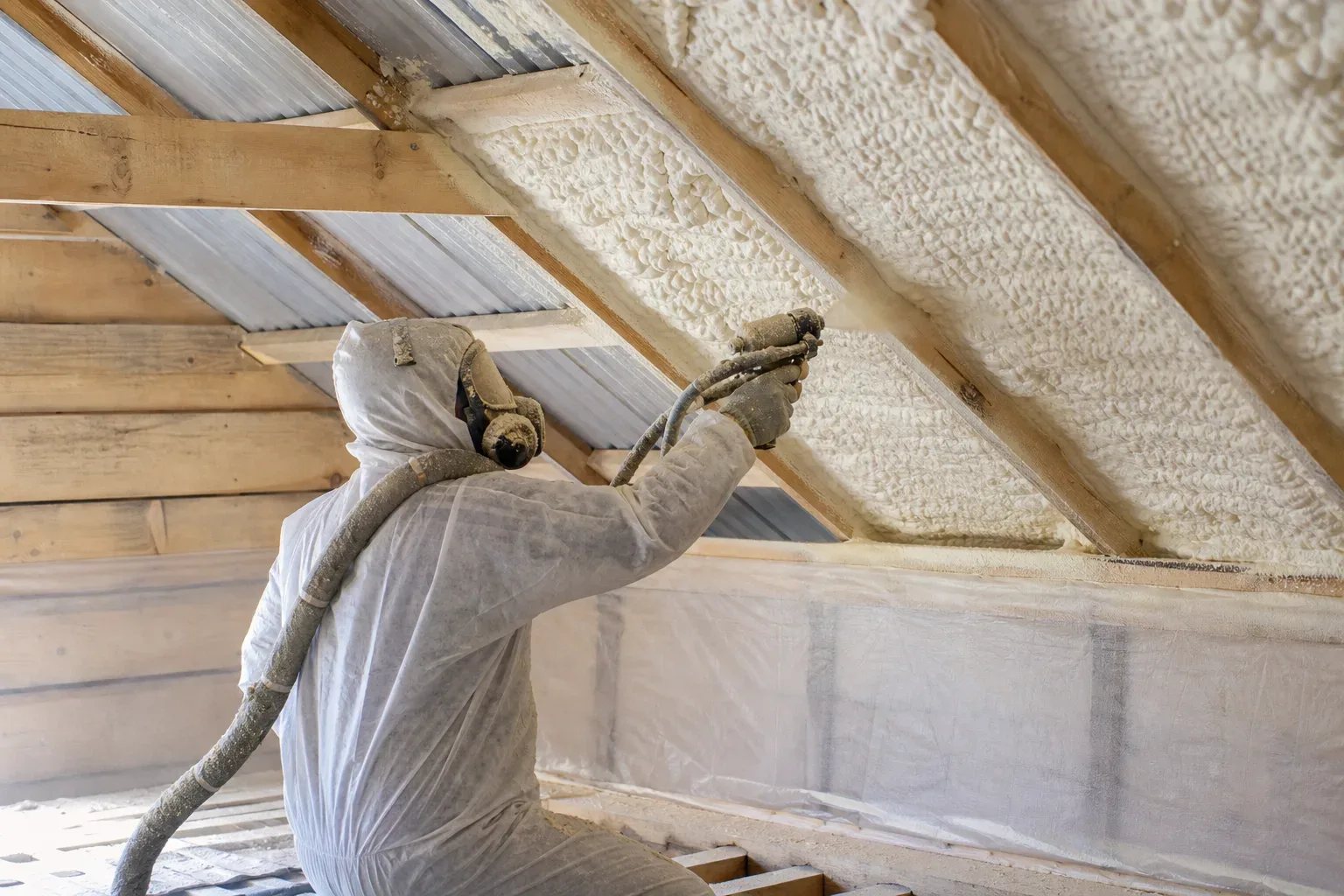
What Spray Foam Loft Insulation Actually Does
Spray foam is applied as a liquid that expands on contact and sets into either an open-cell or closed-cell foam. Open-cell foam is softer, more flexible, and primarily used at rafter level to create a warm roof, bringing the loft into the thermal envelope of the house. Closed-cell foam is denser and rigid, offering a higher thermal resistance per millimetre, and is also used as a barrier against moisture ingress.
Both types bond directly to the roof timbers and felt. That bond is part of the problem discussed below, but it is also why spray foam can outperform loose-fill alternatives in awkward, irregularly shaped loft spaces where mineral wool rolls are difficult to fit neatly.
How Much Does Spray Foam Loft Insulation Cost in Bristol?
Spray foam insulation costs £20–£50 per m² in Bristol, depending on the foam type and how accessible the loft is. Closed-cell foam sits at the higher end of that range because the material is denser and the application requires more product.
For a semi-detached Bristol property with a loft floor area of around 50–70 m², the installed cost typically lands between £1,000 and £3,500. That is substantially more than conventional mineral wool, and the price differential needs to be weighed carefully against the performance benefits and the risks set out below.
Comparing the Cost to Other Insulation Materials
Mineral wool remains the most cost-effective option for most Bristol homes. A semi-detached property typically runs £400–£600 for a full mineral wool installation to the recommended 270 mm depth.
Sheep wool insulation is a natural, breathable alternative priced at £15–£35 per m², making it competitive with the lower end of spray foam pricing while avoiding the mortgage complications entirely. For homeowners who want an eco-friendly upgrade without the financial risks attached to spray foam, sheep wool is worth serious consideration.
The Mortgage Risk - A Serious Issue for Bristol Homeowners
Spray foam insulation can affect mortgage and remortgage applications and may deter buyers when you come to sell. This is the single most important factor Bristol homeowners need to understand before proceeding.
The core concern for surveyors and lenders is that spray foam bonds permanently to roof timbers and felt. Once applied, a surveyor cannot easily inspect the condition of the underlying structure. Many lenders treat this as an unacceptable unknown and decline to lend, or they require the foam to be removed before they will offer a mortgage. Removal is costly, disruptive, and may itself damage timbers in the process.
This is not a fringe issue. Homeowners across Bristol have found themselves unable to remortgage or sell because of spray foam installed years earlier, sometimes by previous owners. If you are planning to sell within the next decade, or if your fixed-rate deal ends and you will need to remortgage, you should factor this risk into your decision with care.
What If the Foam Is Already in Your Property?
If you have purchased a Bristol home that already contains spray foam, or you are considering buying one, commission an independent specialist survey before proceeding. Some specialist surveyors can assess whether the foam has been correctly applied and whether the timbers appear sound, which may satisfy certain lenders. It is not guaranteed to resolve the issue, but it is the starting point.
Removing spray foam is possible but expensive. Expect costs that can run to several thousand pounds depending on the size of the roof and the thoroughness of the original application.
When Spray Foam Might Still Make Sense
There are circumstances where spray foam is a practical choice despite the caveats. Difficult-to-access loft spaces with complex geometry can be insulated more thoroughly with spray foam than with any roll or batt product. Properties that will not be sold or remortgaged, such as a long-term rental investment or a home owned outright with no mortgage required, avoid the lender risk altogether.
Spray foam applied at rafter level to create a warm roof is also appropriate where the loft is being converted to usable floor space, though that work will require building regulations approval regardless of the insulation method chosen. Most standard loft insulation in Bristol does not require planning permission, but a conversion to habitable space is a separate matter entirely.
Performance Figures Worth Knowing
A correctly installed warm roof using closed-cell spray foam can achieve a U-value of 0.16 W/m²K, which is the target under Approved Document L for pitched roofs insulated at ceiling level in existing dwellings. Mineral wool at the recommended depth of 270 mm achieves the same target at a fraction of the cost and without the mortgage complications.
An uninsulated loft can account for up to 25% of a home's heat loss. Whether you choose spray foam or mineral wool, addressing that loss is worthwhile. The annual energy bill saving for a typical Bristol home after professional loft insulation is in the region of £150–£300 per year, and insulation installed correctly will last 40 years or more.
Grant Funding and Spray Foam
Spray foam is rarely covered under grant schemes. ECO4, the Energy Company Obligation scheme that runs to 31 December 2026, funds insulation for households on qualifying benefits or with a gross income up to approximately £31,000 per year. In practice, funded installations under ECO4 almost always use mineral wool rather than spray foam, because it is the cost-effective, lender-safe standard.
The Warm Homes: Local Grant, delivered in Bristol via Bristol City Council, runs to 31 March 2028. Again, this is oriented toward conventional insulation products. If you are eligible for either scheme, mineral wool is almost certainly the better route, both financially and for future mortgage purposes.
Choosing a Reputable Installer in Bristol
If you do proceed with spray foam after weighing all the factors, using an accredited installer is non-negotiable. Look for contractors registered under TrustMark or the National Insulation Association, the two main accreditation schemes for Bristol insulation work. Both provide a framework for quality and redress if something goes wrong.
Get at least three written quotes. Bristol installers typically turn quotes around within 2–5 working days of an initial enquiry, and the installation itself for a standard loft usually takes half a day to one full day. A reputable installer will also explain the mortgage implications honestly and should not pressure you into proceeding if your circumstances make spray foam a poor fit.
Making the Right Decision for Your Bristol Home
Spray foam offers genuine thermal performance in the right situations, but the mortgage risk is real and it affects a significant number of Bristol homeowners every year. For most residential properties where loft insulation is needed primarily for energy efficiency, mineral wool at 270 mm delivers the same thermal target at lower cost, with no lender complications, and a lifespan that exceeds 40 years.
If your property has an unusual loft configuration, or if you have no mortgage and no near-term plans to sell, spray foam is worth a detailed conversation with an accredited installer. In most other cases, the conventional route remains the more straightforward and financially safer choice.
Frequently Asked Questions
How Much Does Spray Foam Loft Insulation Cost in Bristol?
Spray foam loft insulation costs £20–£50 per m² in Bristol. For a typical semi-detached property, the total installed cost commonly falls between £1,000 and £3,500 depending on the foam type and loft accessibility.
Will Spray Foam Loft Insulation Affect My Mortgage?
Yes, it can. Spray foam bonds to roof timbers and prevents surveyors from inspecting the underlying structure. Many lenders decline to offer mortgages or remortgages on properties with spray foam in the roof space, and some buyers may walk away entirely. This is the most significant risk associated with spray foam insulation.
Can I Get a Grant for Spray Foam Loft Insulation in Bristol?
Grant schemes such as ECO4 and the Warm Homes: Local Grant almost always fund conventional insulation products rather than spray foam. If you are eligible for funded support, mineral wool is the practical option available through these programmes.
What Is the Difference Between Open-cell and Closed-cell Spray Foam?
Open-cell spray foam is softer and more flexible, typically used at rafter level in warm roof applications. Closed-cell foam is denser and rigid, offering higher thermal resistance per millimetre and better moisture resistance, but it costs more and sits at the top of the £20–£50 per m² price range.
How Do I Find a Trustworthy Spray Foam Installer in Bristol?
Look for installers registered under TrustMark or the National Insulation Association, the two main accreditation schemes referenced for Bristol insulation work. Collect at least three written quotes, which typically arrive within 2–5 working days, and ask each installer to explain the mortgage implications clearly before you sign anything.